Available on every plan · Updated 12 September 2026
Also asked as: “guest checkout” · “shoppers must create an account” · “checkout questions” · “order notes” · “abandoned carts” · “store is busy message”
Checkout itself is the same on every store, on purpose: one page, tested, accessible, and impossible to break by accident. What Settings → Checkout controls is who may use it, what it says, and what you record about carts that never get there.
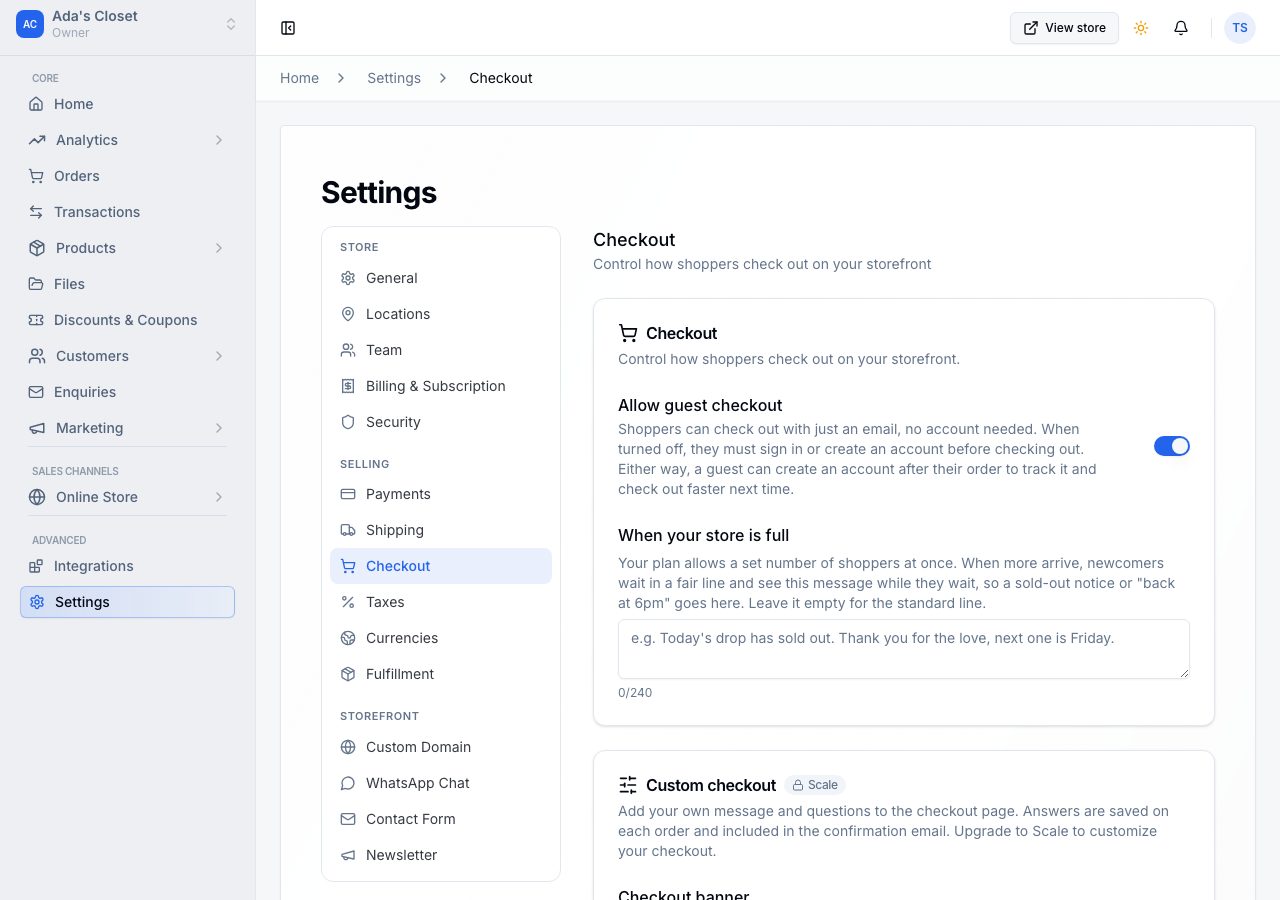
Allow guest checkout
On by default, and worth leaving on. A shopper checks out with just an email address and no account. With it off they must sign in or create an account first, which loses you orders from first-time buyers.
Nothing is lost by allowing guests. The order is still yours, it still appears in your Orders list with the customer's details, and after paying the shopper is offered the chance to set a password and claim the order into an account, which keeps their order history and makes them faster next time. A shopper who already has an account with you is recognised from their email and offered sign-in instead.
When your store is full
Your plan allows a number of shoppers on your storefront at once. When more arrive than that, the newcomers wait in a fair line and are let in as others leave. The box here is the message they read while waiting, up to 240 characters. Use it for something a shopper would find useful, for example that today's drop has sold out or when you reopen. Leave it empty and they get the standard line.
This matters most on a sale day. It is not an error page: nobody is turned away, they are held in order of arrival.
Custom checkout
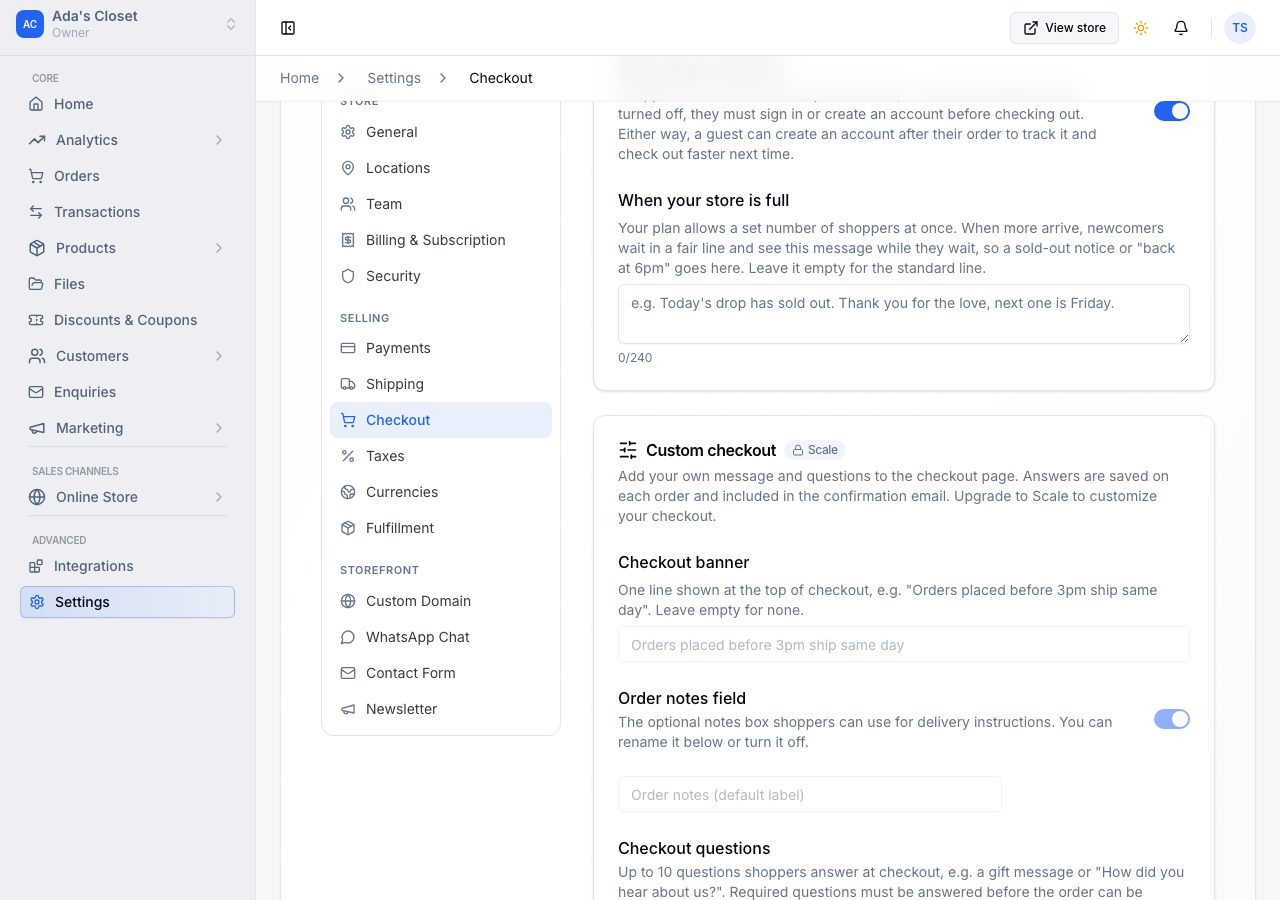
On Scale, three things on the checkout page become yours:
- Checkout banner: one line across the top of checkout, for example when orders placed before a certain hour ship the same day.
- Order notes field: the optional box a shopper uses for delivery instructions. You can rename it or turn it off.
- Checkout questions: up to ten questions a shopper answers at checkout, such as a gift message or how they heard about you. A question can be required, which means the order cannot be placed without it. Answers are saved on the order and included in your confirmation email.
On a lower plan the card is shown but not editable, with an upgrade link. See the pricing page.
Abandoned cart tracking
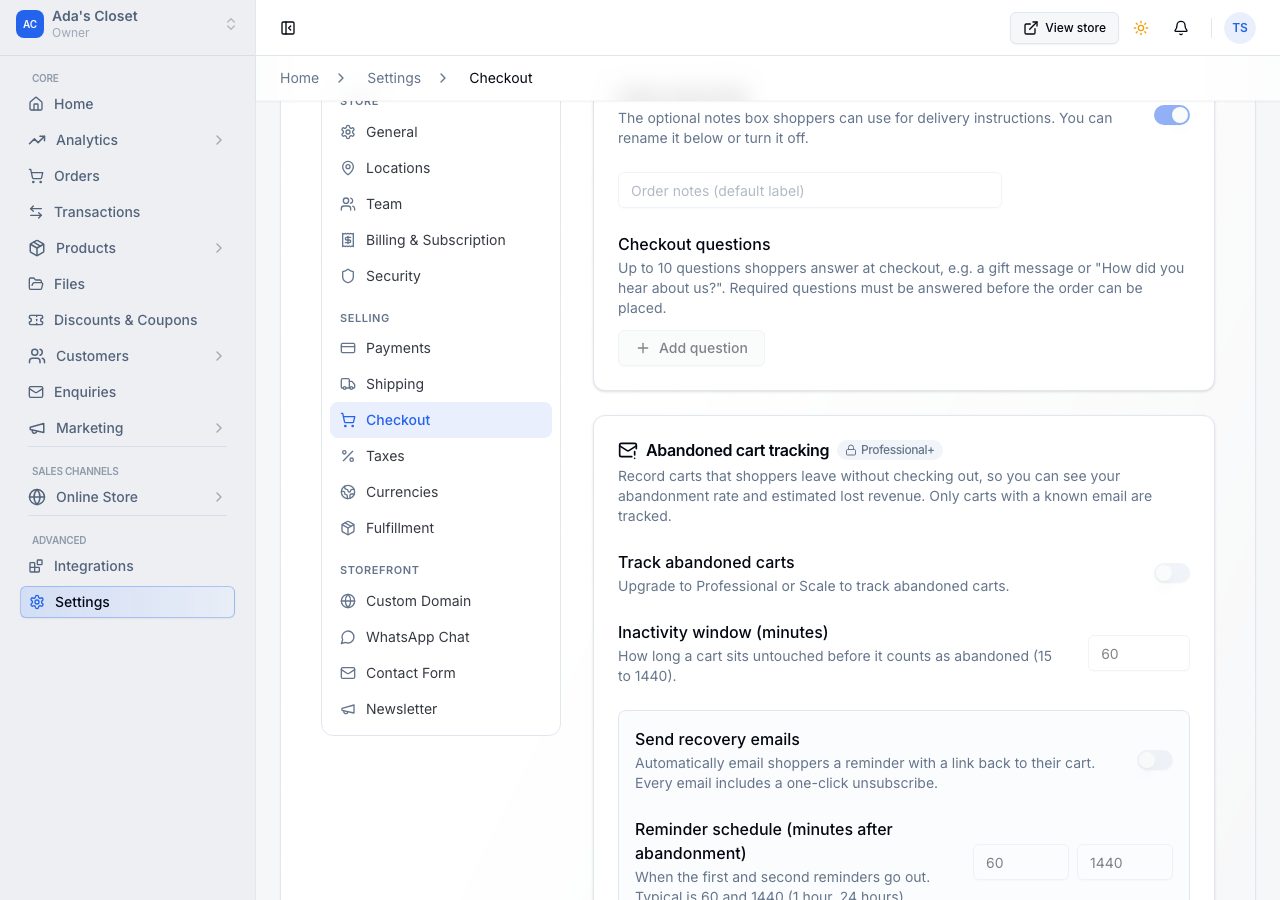
On Professional and above, a cart a shopper leaves without checking out is recorded, so you can see how often it happens and roughly what it costs you. Only carts where you know the email address are tracked, which in practice means a shopper who signed in or reached the point of giving their email.
- Inactivity window is how long a cart sits untouched before it counts as abandoned, between 15 minutes and a day.
- Send recovery emails goes a step further and emails the shopper a link back to their cart, on a schedule you set in minutes after abandonment. A typical pair is one hour and one day. Every one of those emails carries a one-click unsubscribe.
- Only email marketing subscribers narrows it to people who opted into marketing. It is off by default, because a reminder about a cart the shopper started is not really marketing.
The carts themselves are listed under Marketing → Abandoned Carts, and what the reminders say and when they go out is Abandoned cart recovery.
Saving
Choose Save Changes at the foot of the page. Everything on this page saves together.
If it does not work
- A switch will not move. It needs a higher plan; the card says which above it.
- Shoppers still have to create an account. Allow guest checkout has been turned off. Turn it back on and save.
- You added checkout questions and cannot see the answers. They are on the order itself, under the order's details, and in the confirmation email.
- A shopper reports being told to wait. That is the line described above, and it clears on its own. If it happens often at ordinary times rather than during a sale, tell us.
Email support@shoponent.com with your store name if anything here does not match what you see. We read and answer every message.