Available on Professional and Scale · Updated 12 September 2026
Also asked as: “write a blog post” · “add an article” · “blog seo” · “shoppable blog” · “schedule a post”
A blog is how people find your store without paying for an advertisement. Someone searches for a question, reads your answer, and is already on your storefront. Online Store → Blog Posts is where you write them. It is on Professional and above; see the pricing page.
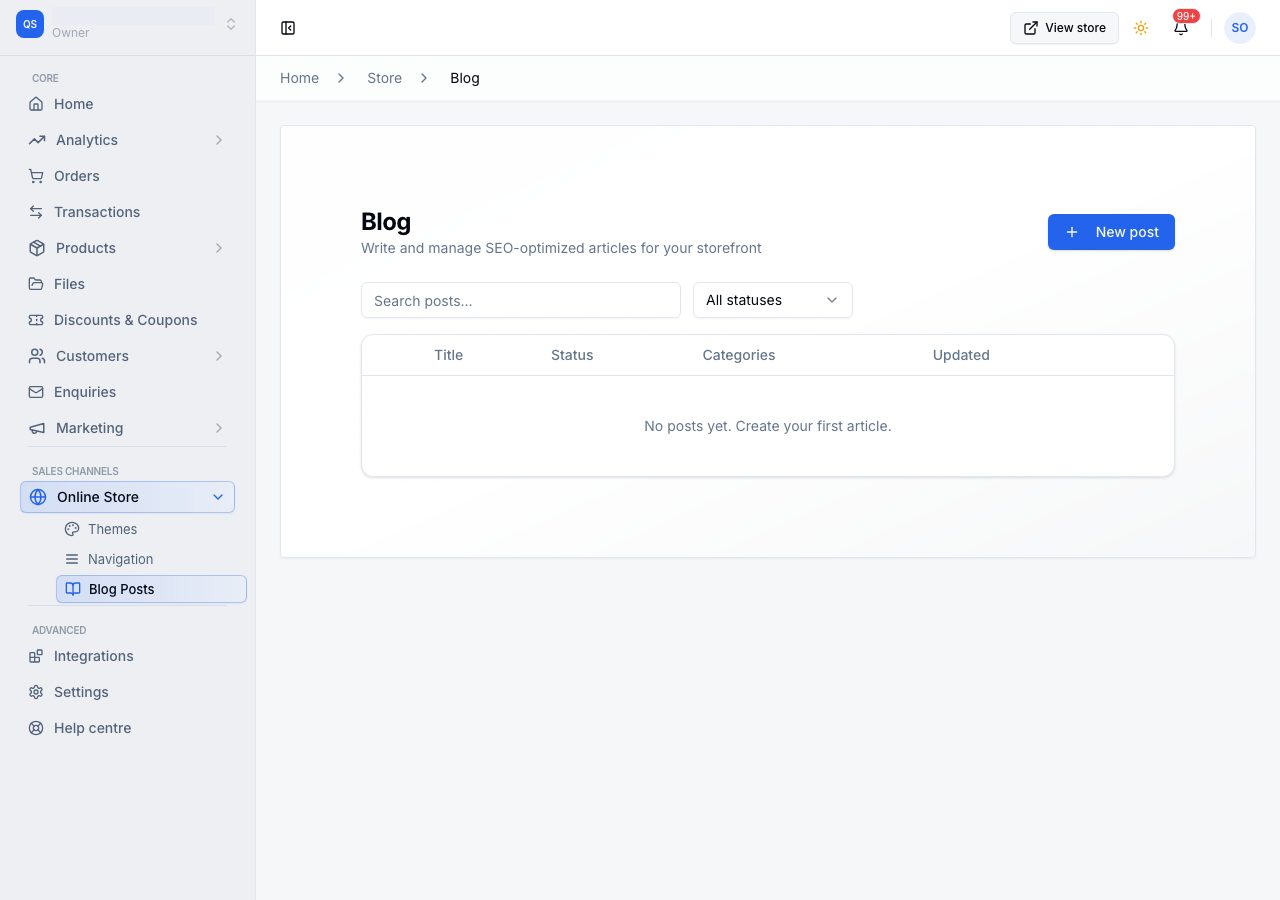
1. Start a post
Choose New post. The editor has your article down the middle and its settings down the right.
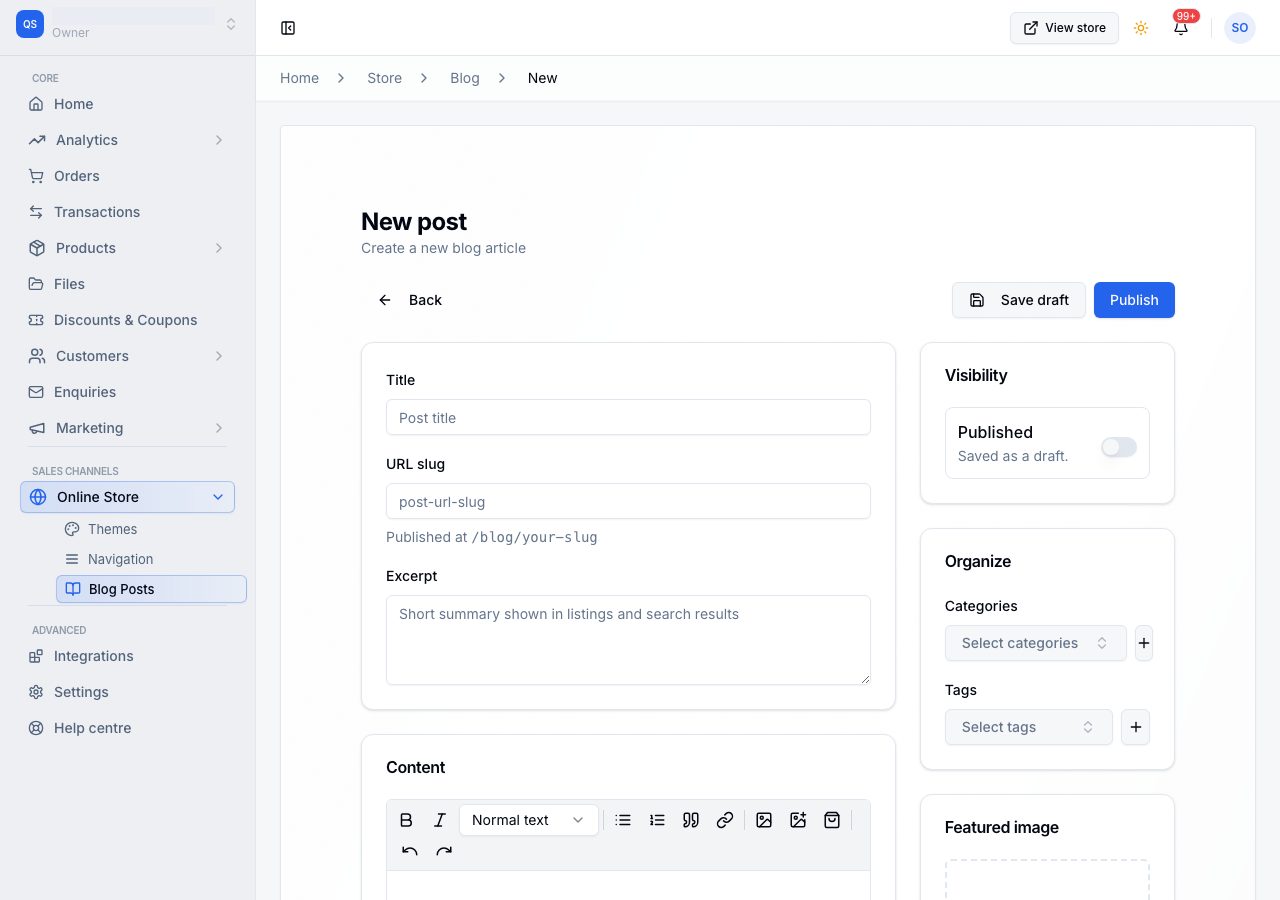
- Title, the headline.
- URL slug, the last part of the address. The line under it shows where the post will live, under
/blog/. Keep it short and readable, and settle it before you publish, because changing it later breaks links people have already shared. - Excerpt, the short summary shown in your blog listing and in search results.
- Content, the article. Bold, italics, headings, lists, quotes, links and images.
2. Organise it
On the right:
- Visibility is the Published switch. Off means draft, and drafts are yours alone.
- Categories and Tags group posts. Each gets its own page on your storefront, so a reader can see everything you have written on one subject. The + beside each creates a new one without leaving the editor.
- Featured image is the picture shown beside the post in your listing and when someone shares it.
3. Put your products in it
The toolbar in Content has a control for inserting a product. Pick one product, or several, and a card for each is placed in the article where your cursor is.
These are live: the price, the picture and whether it is in stock are read from your catalogue every time somebody reads the post, so an article written in March is never showing March's price. A product you delete or unpublish simply disappears from the post rather than leaving a broken card. Each card links to the product's page.
4. Say how it should look in search
Further down the editor is Search engine optimization, which shows a preview of how the post will appear in a search result and lets you control it.
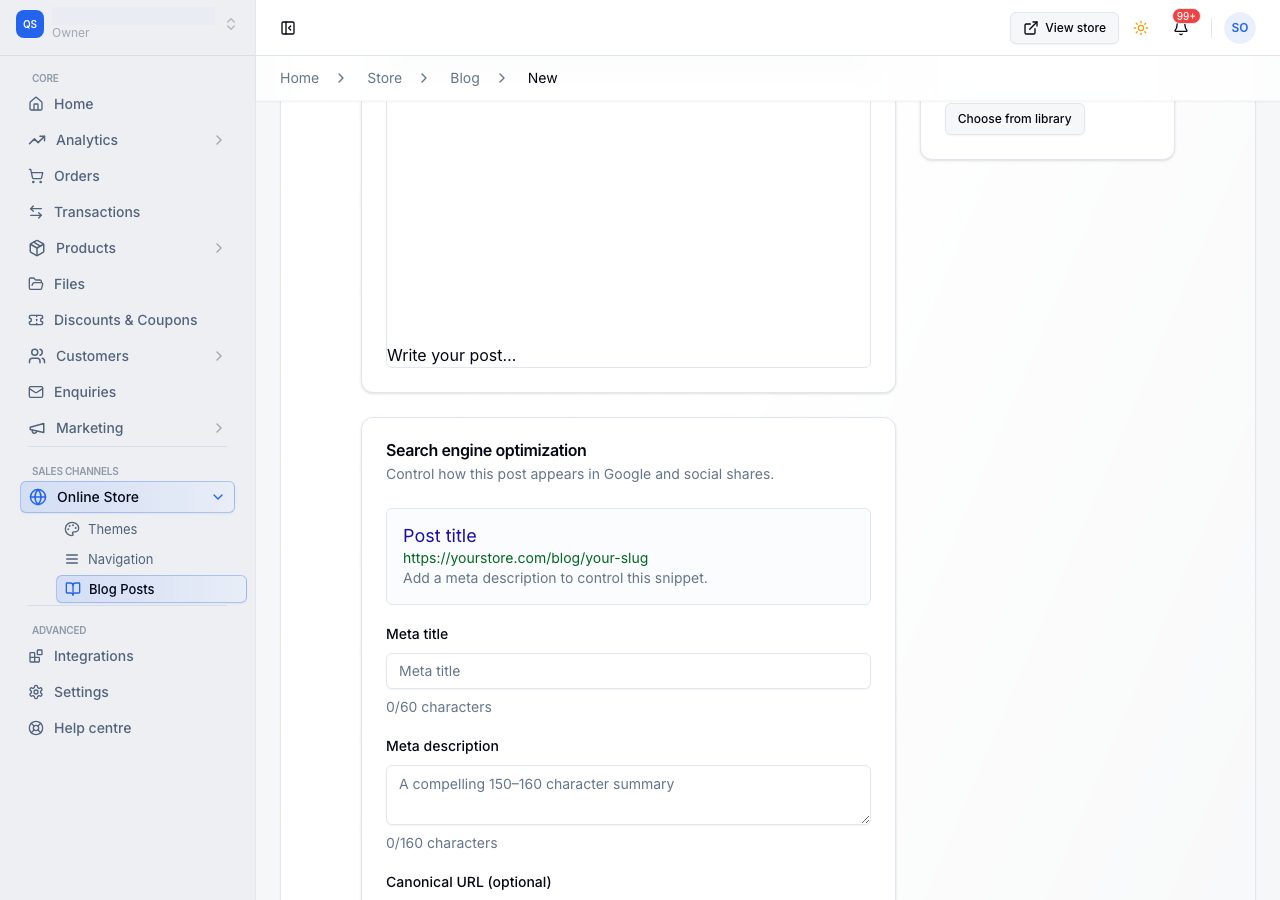
- Meta title, up to 60 characters, and Meta description, up to 160. The counters show how much of what you type will actually be displayed.
- Canonical URL, only if this article was published somewhere else first. Leave it blank otherwise.
- Social share image, used when the link is posted to a social network. It falls back to your featured image.
Everything else search engines want is filled in for you: the article's author, its dates, its structured data, its place in your sitemap.
5. Publish
Save draft keeps it private. Publish puts it on your storefront at once, under /blog, with its own page, and in the category and tag listings it belongs to.
There is no scheduling: a post goes live when you publish it, so write it in draft and publish when you mean to.
What is not in it yet
- Comments. Posts do not take them.
- Scheduled publishing.
- An RSS feed.
If it does not work
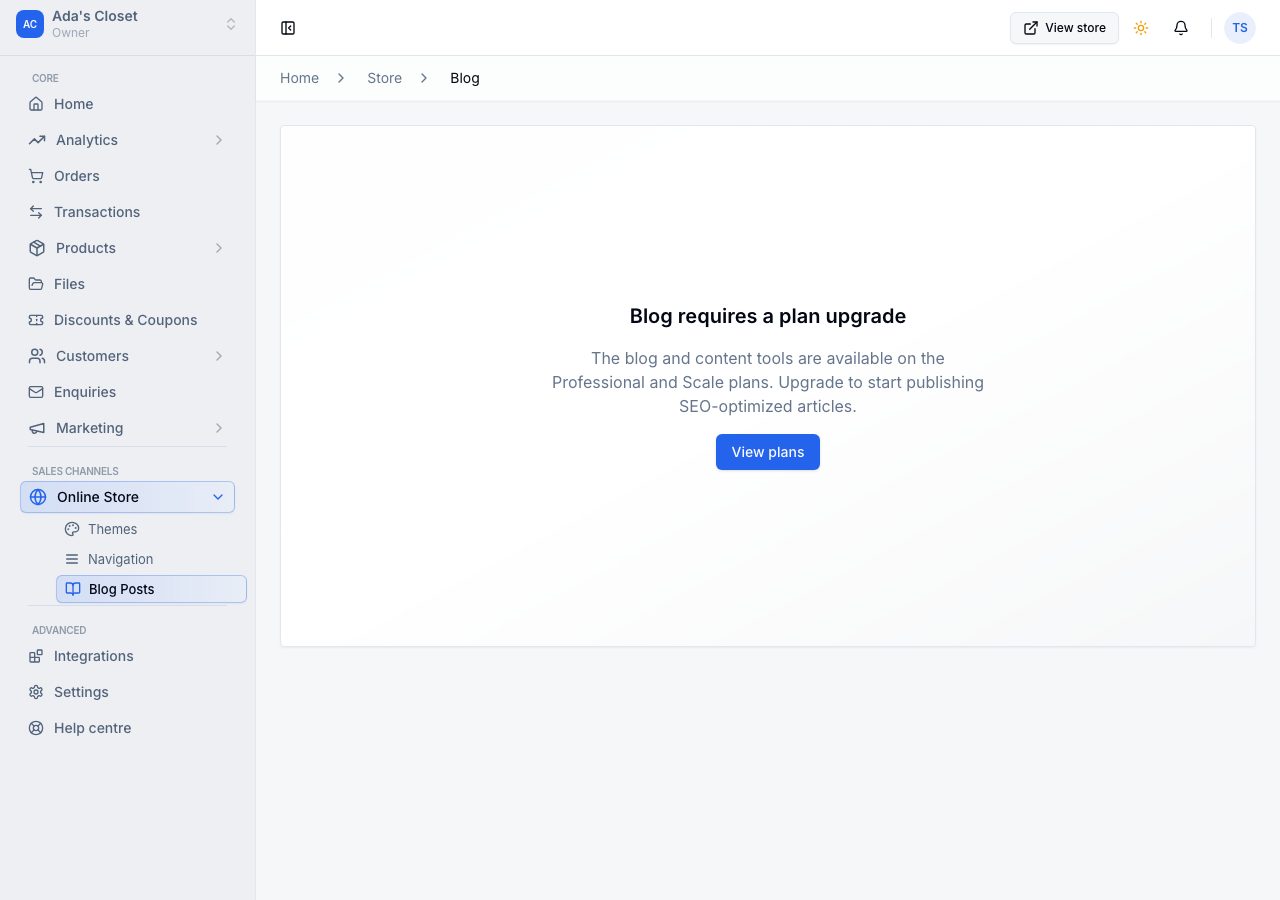
Blog Posts opens an upgrade screen. It needs Professional or Scale.
The post is not on your storefront. The Published switch is off, or you are looking at a category page with nothing published in it yet.
A category page 404s. An empty category has no page. It appears once a published post uses it.
Nobody can find your blog. Add a link to
/blogin your header or footer under Navigation.A product card in a post is missing. The product was deleted or unpublished. Cards are read live, so the article stays readable without it.
Email support@shoponent.com with your store name if anything here does not match what you see. We read and answer every message.