Available on every plan · Updated 12 September 2026
Also asked as: “group my customers” · “vip customers” · “repeat buyers” · “segment customers” · “customer tags”
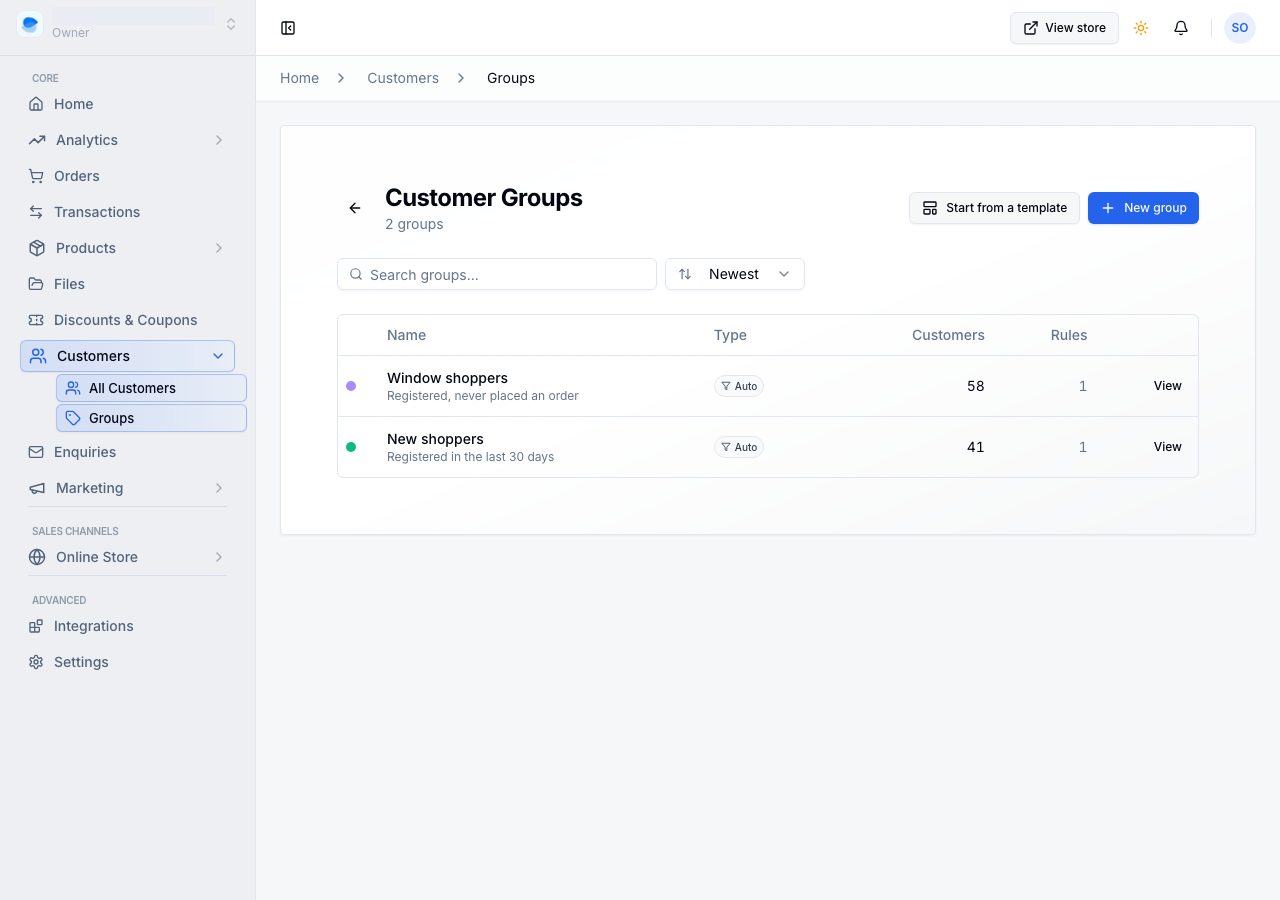
A group is a named bucket of customers. Customers → Groups lists the ones you have, with how many people are in each.
The two kinds
| You get | |
|---|---|
| Manual | a list you decide. Customers are put in one by one or in bulk, and stay until you take them out |
| Automatic | a rule. Anyone who matches is in it, anyone who stops matching drops out, and you never maintain it |
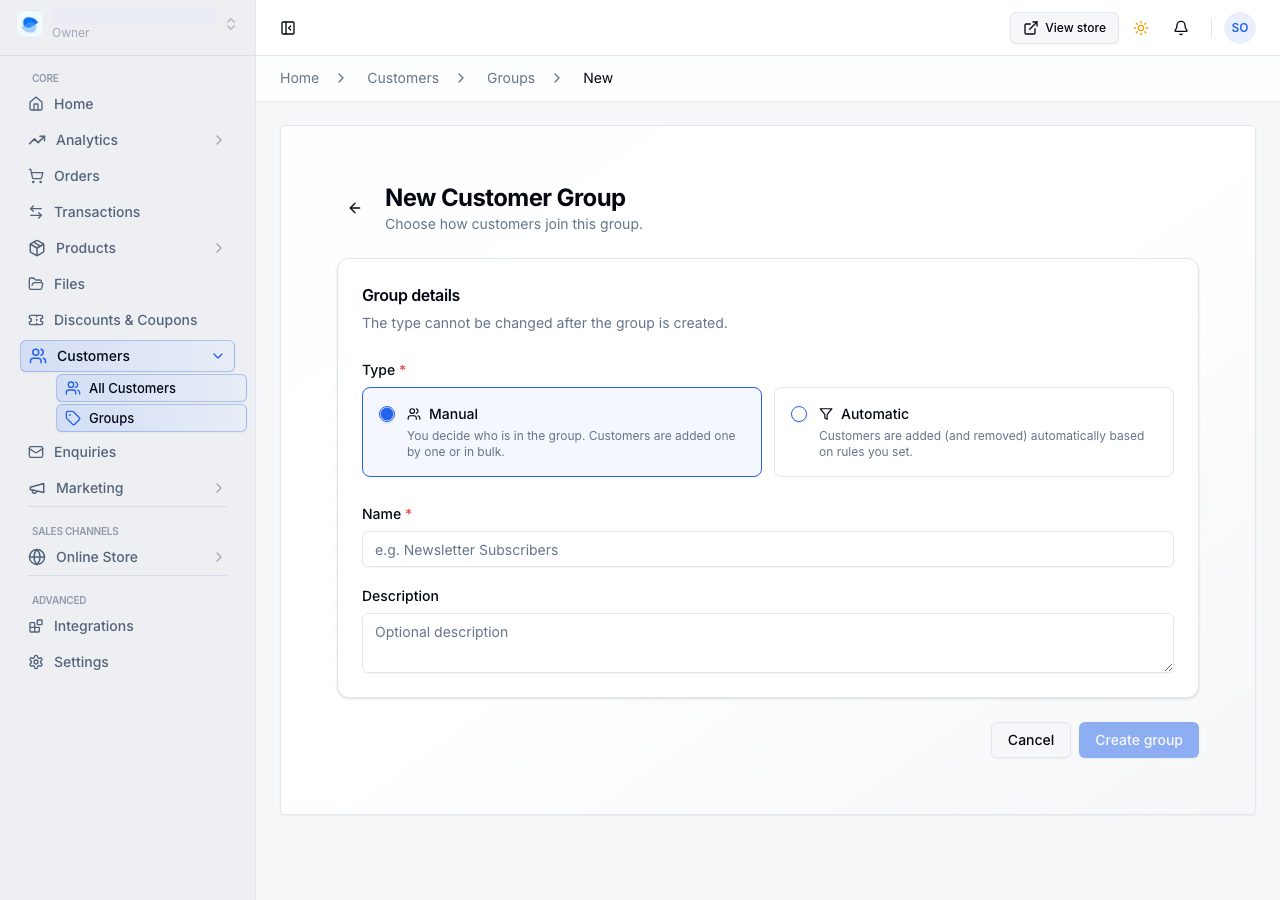
The type cannot be changed once a group exists, so pick it deliberately. "Our wholesale buyers" is a manual group; "people who have bought twice" is an automatic one.
Start from a template
Start from a template is the quickest way to a useful automatic group. Each template says what it would match right now, on your own customers, before you pick it.
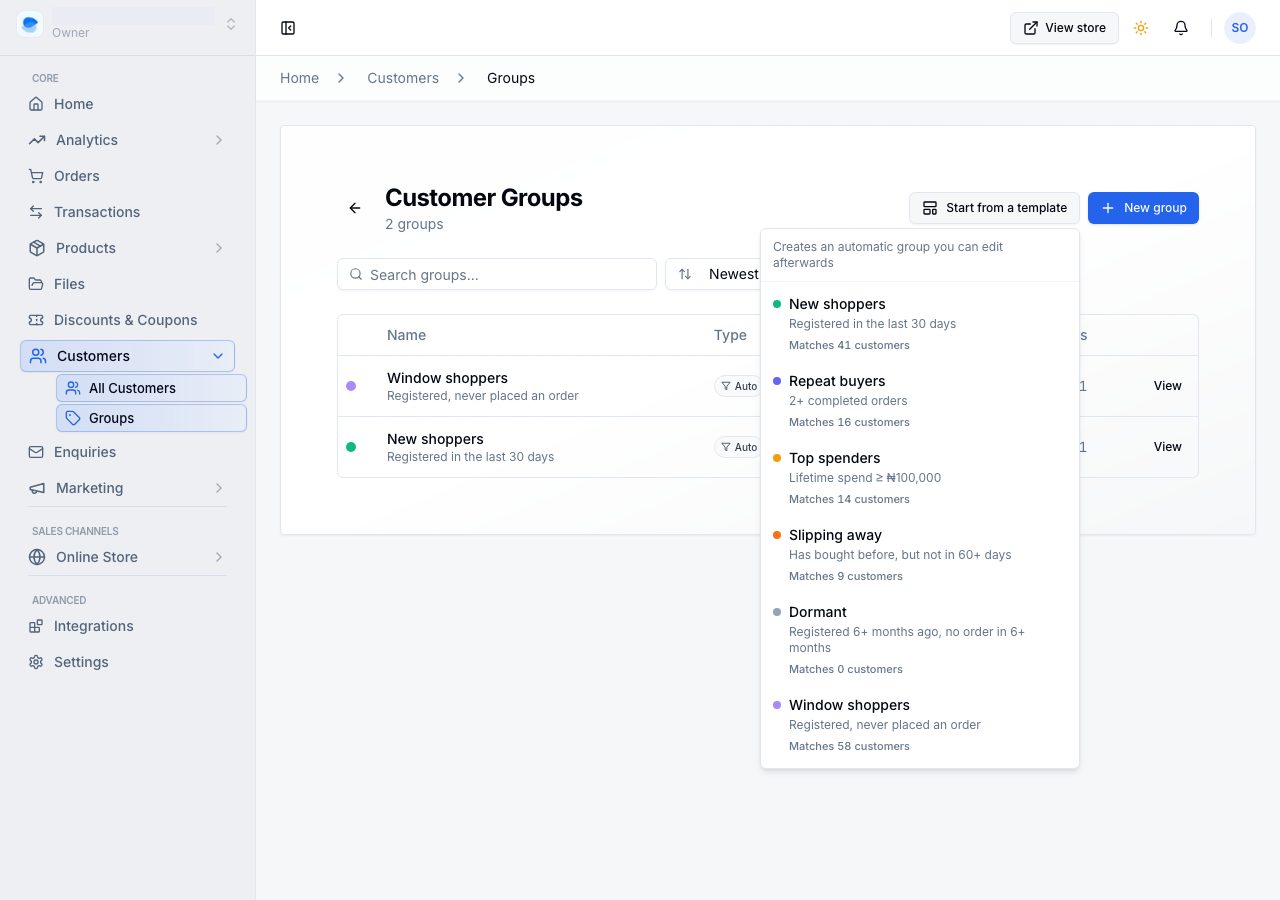
Picking one creates a normal automatic group you can rename, re-describe and re-rule afterwards. It is a starting point, not a fixed thing.
Or write your own
New group asks for the type first, then a name and a description. An automatic group then takes its rules: conditions on what a customer has done, all of which must match.
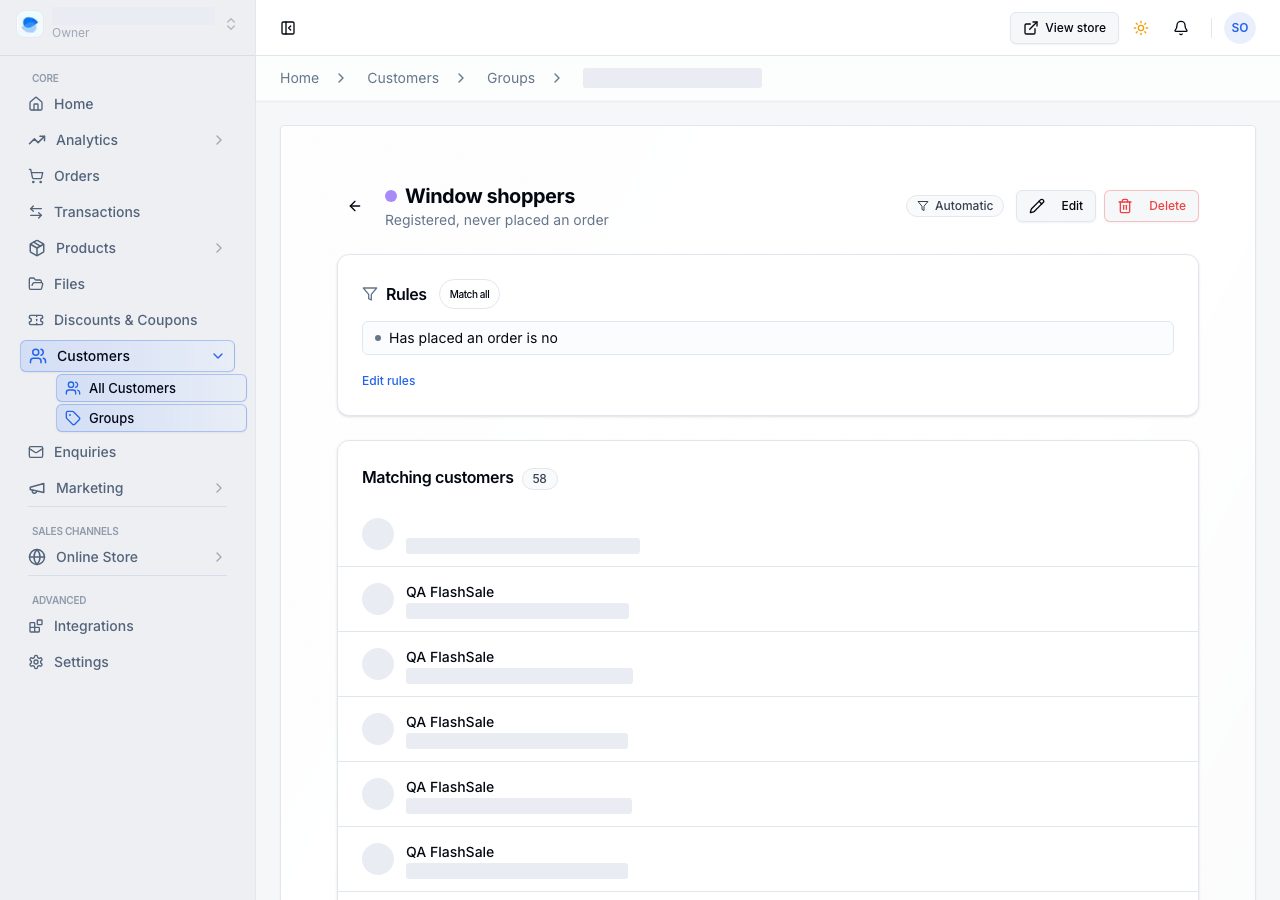
Open a group to see its rules and who currently matches. Edit rules changes the rule, and the membership follows at once: an automatic group is never a stored list, it is the answer to its own question, asked when you look.
Putting people in a manual group
Two ways, and they do the same thing:
- From the list: tick the customers you want, then Add to group. Remove from group takes them out again.
- From one profile: the Groups card, then Add.
Automatic groups have no add or remove: the rule decides.
What groups are for
- Filtering your customer list, and the CSV you export from it.
- Targeting a discount at particular people: a coupon or an automatic discount can be limited to members of one or more groups, and anyone else is told the code is not available on their account. See Discounts and coupons.
Groups are on every plan.
If it does not work
- The type cannot be changed: it cannot, by design. Create the other kind and move on; deleting a group does not touch the customers in it.
- Add to group is missing: automatic groups do not accept members by hand, and a team member with view-only access cannot change groups at all.
- A count looks wrong: automatic counts are worked out when you look at them, so they move as your customers do. A customer whose payment was refunded partly still counts as a buyer; an unpaid or cancelled order never did.
- Somebody is in a group you did not put them in: check whether the group is automatic. The rule is on the group's own page.
Email support@shoponent.com with your store name if anything here does not match what you see. We read and answer every message.