Available on every plan · Updated 14 September 2026
Also asked as: “my revenue does not match my bank” · “why is this order not counted” · “do unpaid orders count” · “where do refunds show up” · “revenue changed for a past month”
Every money figure in your dashboard is built the same way, from the same two rules:
- An order counts when it is marked paid.
- It counts on the day it was placed, not the day the money arrived.
Everything below follows from those two.
Which orders count
Your Orders list carries the answer in its status column, and it is worth reading once with this in mind.
| On the order | Counts as revenue? |
|---|---|
| Paid | Yes, in full. |
| Partly refunded | Yes. It stays a sale, and the part you gave back comes off separately. |
| Refunded | Yes. It stays a sale on the day it was placed, and the whole refund comes off on the day you gave it. |
| Unpaid | No, not yet. A bank transfer you have not confirmed, or a delivery not yet collected, is not money. |
| Marked Test | Never, on any screen. |
| A draft you have not placed | No. It is not an order yet. |
| Cancelled | The cancellation itself changes nothing about the money. |
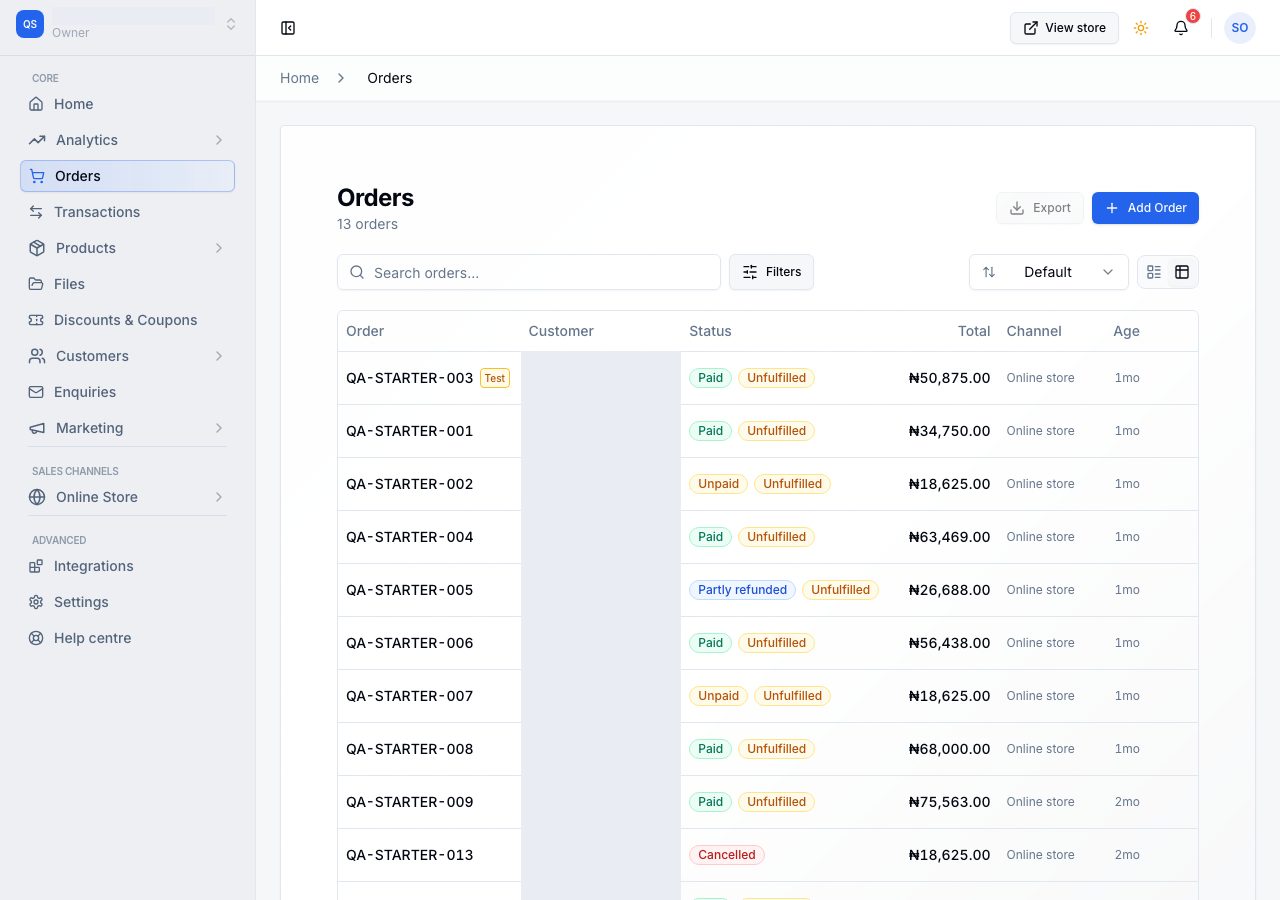
That last row surprises people, so it is worth saying plainly. Cancelling is not refunding. If a shopper paid and you cancelled the order, you are still holding their money and your figures still show it. Refunding is what moves the number, because refunding is what moves the money.
When a sale lands
On the day the order was placed. If someone orders on the 31st and pays by transfer on the 2nd, that sale belongs to the 31st, and it appears there the moment you mark it paid.
The useful consequence: marking an old order paid changes a past day's figures. That is deliberate. Your sales happened when your customers bought, not when their bank got round to it.
When a refund lands
On the day you issued it, not the day of the sale. A July sale that you refund in September comes off September.
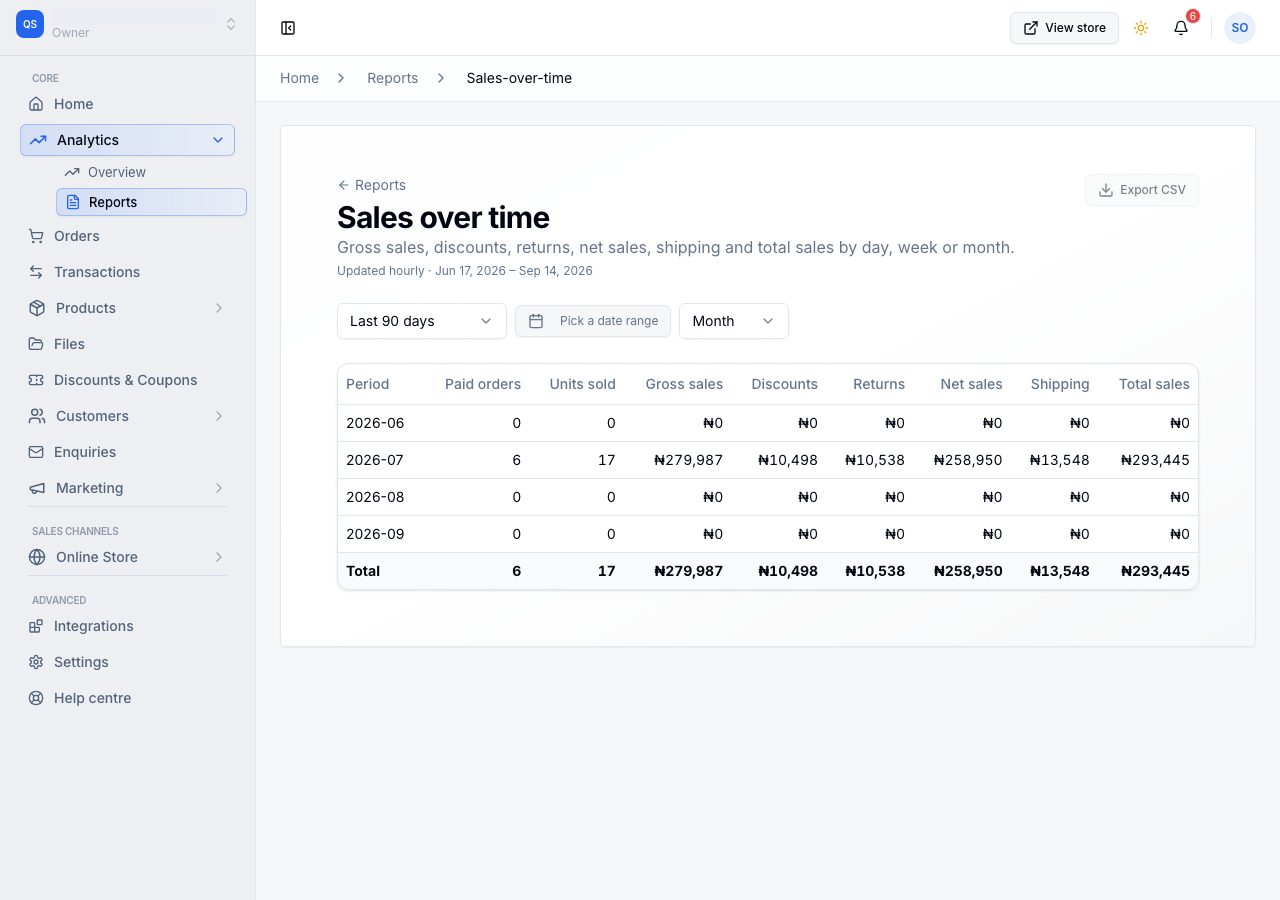
A refunded order stays a sale for its full value, whether you gave back part of it or all of it, and the amount you gave back appears on its own line, as Returns. July keeps its sale, September carries the return, and neither month is rewritten behind your back. Over the two months together, an order refunded in full comes to nothing, which is what it was worth to you.
A refund is recorded from the order's return, with the amount you gave back, and the order's payment status follows from it. See Cancel, refund or return an order.
What comes off, in order
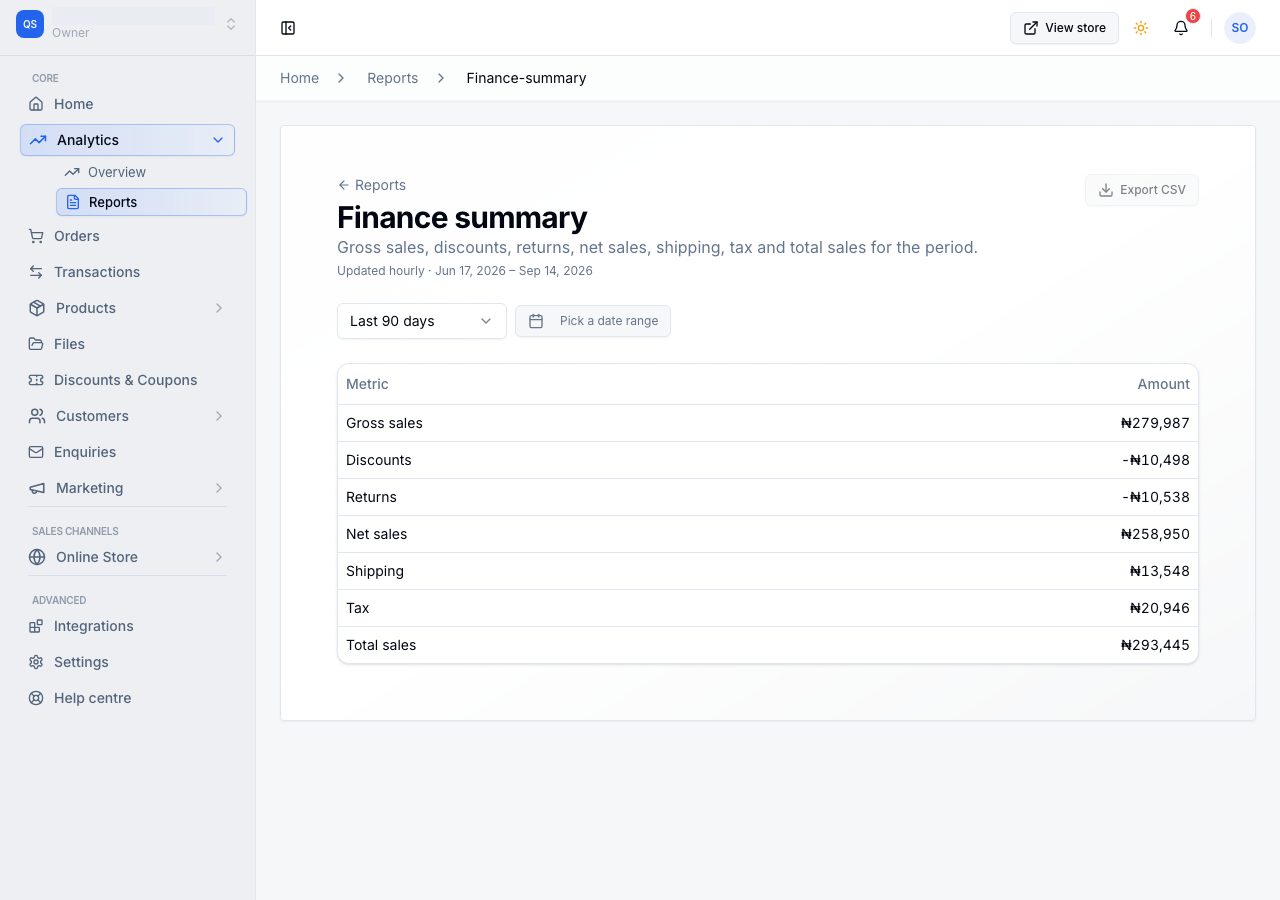
The finance summary is the whole calculation, top to bottom:
- Gross sales: what the goods themselves sold for.
- Discounts: coupons and automatic discounts, subtracted.
- Returns: refunds issued in this period, subtracted.
- Net sales: gross, less those two. What you earned on the goods.
- Shipping: what shoppers paid you to deliver, added.
- Tax: tax collected, added.
- Total sales: what shoppers were actually charged, net of what you gave back.
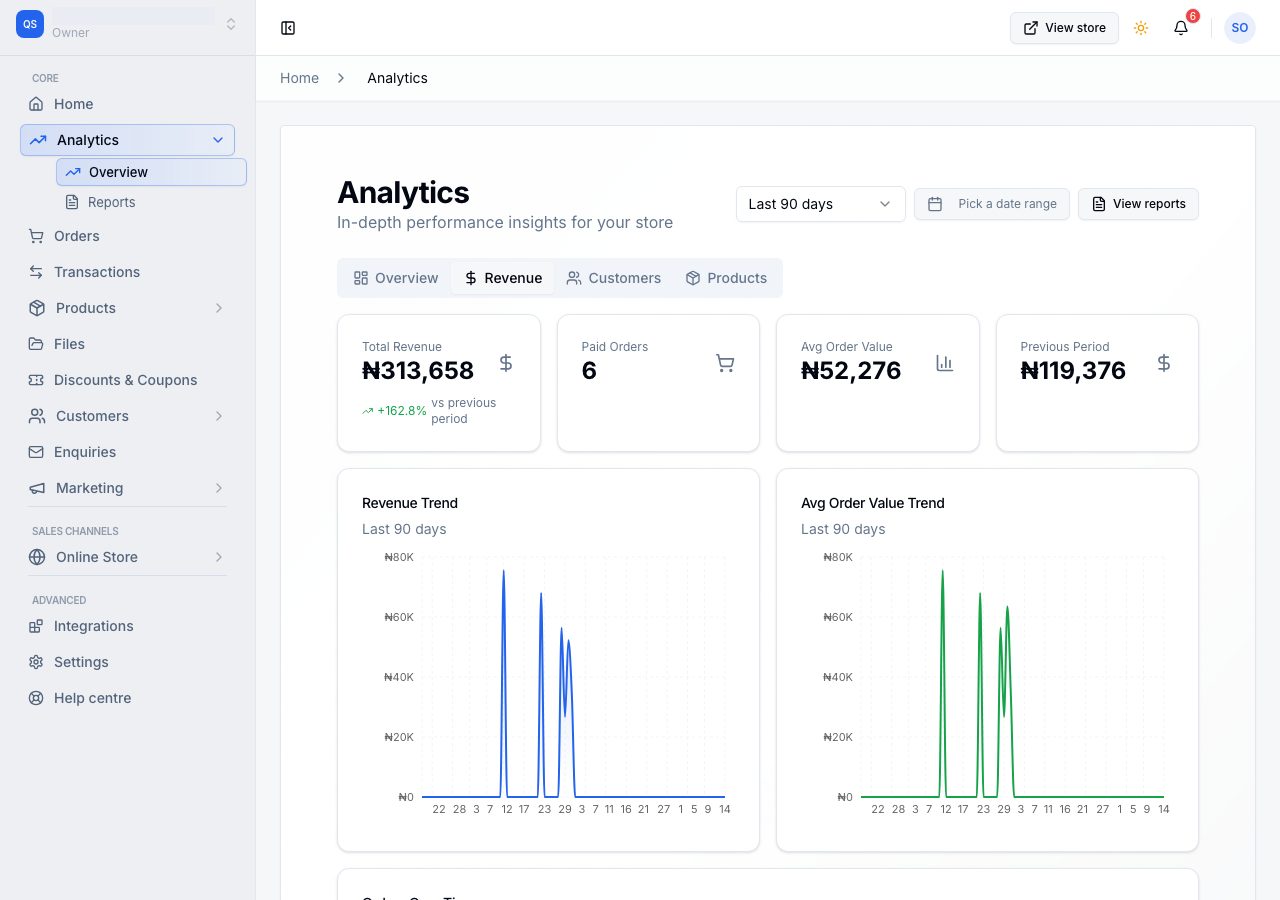
Total sales is the figure that should reconcile, and Total Revenue on the Analytics page is the same figure by another name.
Checking against your bank
Three differences are normal, and none of them is an error.
- Fees. These figures are what the shopper was charged. Your payment provider takes its fee on its side, so the payout landing in your account is smaller.
- Timing. A sale is dated to the day it was placed; providers settle on their own schedule, usually a day or more later. A week here will not line up with a week on your statement at the edges.
- Currency. Figures are in your store's own currency. When a shopper pays in another one, the order still carries its amount in yours, and that is what is counted.
If those three are accounted for and the figures still disagree, that is worth an email.
How the range is chosen
Days begin and end at midnight in your store's time zone, so a sale just before midnight belongs to that day and not the next. Ranges come from the menu at the top of Analytics or of any report, or from two dates of your own.
"Compared with the previous period" means two different things, deliberately:
- A to date range (This Month, This Year) compares like with like: the 1st to the 15th of this month against the 1st to the 15th of last month, not against a whole month you are only halfway through.
- A rolling or complete range compares the same length of time immediately before it.
Why two screens can show different order counts
Both are right; they answer different questions.
- Orders Placed on the Analytics overview counts every order placed in the range, paid or not, so it tells you how busy you were.
- Paid Orders on the Revenue tab, and the Paid orders column in the sales reports, count only the paid ones, because those are the orders the money came from. An order you later refunded is still one of them; its refund comes off the money, not the count.
A range with ten orders and seven payments shows both numbers, and nothing is missing.
If it does not work
- An order is missing from your figures: open it and look at the payment status. Unpaid and Test are the two usual answers.
- A past month changed: an order placed in it was marked paid since you last looked, because a sale belongs to the day it was placed. A refund never changes a past month; it comes off the day it was issued.
- Analytics and a report disagree: reports are rebuilt hourly and Analytics is worked out live, so the last hour can differ. Anything older than that is worth reporting.
- You have more than one location and everything looks low: stores with two or more locations get a location filter beside the date range, and it scopes the figures to orders fulfilled from that one. Set it back to All Locations.
- It still does not add up: send us your store name, the date range and one order number you think is wrong, and we will trace it with you.
Email support@shoponent.com with your store name if anything here does not match what you see. We read and answer every message.